
Published: November 18, 2025 · Updated: June 2, 2026 · 10 min read
Packing for a Sahara desert tour requires more thought than a typical city holiday. The desert environment involves extreme temperature swings — from warm afternoons to cold nights — fine sand that gets into everything, intense UV radiation, and activities that range from camel riding to climbing dunes on foot. This list is based on what our guides recommend after 12+ years of taking travelers into the Moroccan desert.
Clothing — The Layering System
The key principle for desert packing is layering. You will be warm or even hot at midday, and cool to cold at night. Trying to pack for both extremes efficiently requires thinking in layers rather than separate outfits.
- Lightweight, long-sleeved shirts (2–3): Light linen or synthetic moisture-wicking fabric. Long sleeves protect against sunburn during the day and add warmth in the evening. Avoid cotton — it dries slowly and becomes cold when damp.
- Lightweight trousers (2 pairs): Loose-fitting, light-colored trousers or convertible hiking trousers. Avoid shorts in traditional Moroccan towns out of respect, and note that sand inside shorts on a camel is extremely uncomfortable.
- A warm fleece or down jacket: Essential for desert nights, especially from October to March. Temperatures can drop to near freezing. A packable down jacket is ideal — lightweight and compressible.
- A light waterproof or wind shell: The desert can have sudden cold winds, and the drive through the Atlas Mountains may involve rain or snow in winter months.
- Comfortable walking shoes: Sturdy but not heavy. You will walk on cobblestones in medinas and in sand. Ankle support is helpful. Sandals are useful at the camp.
- Warm socks (2–3 pairs): Cold feet at night are a common complaint in desert camps. Merino wool socks are excellent.
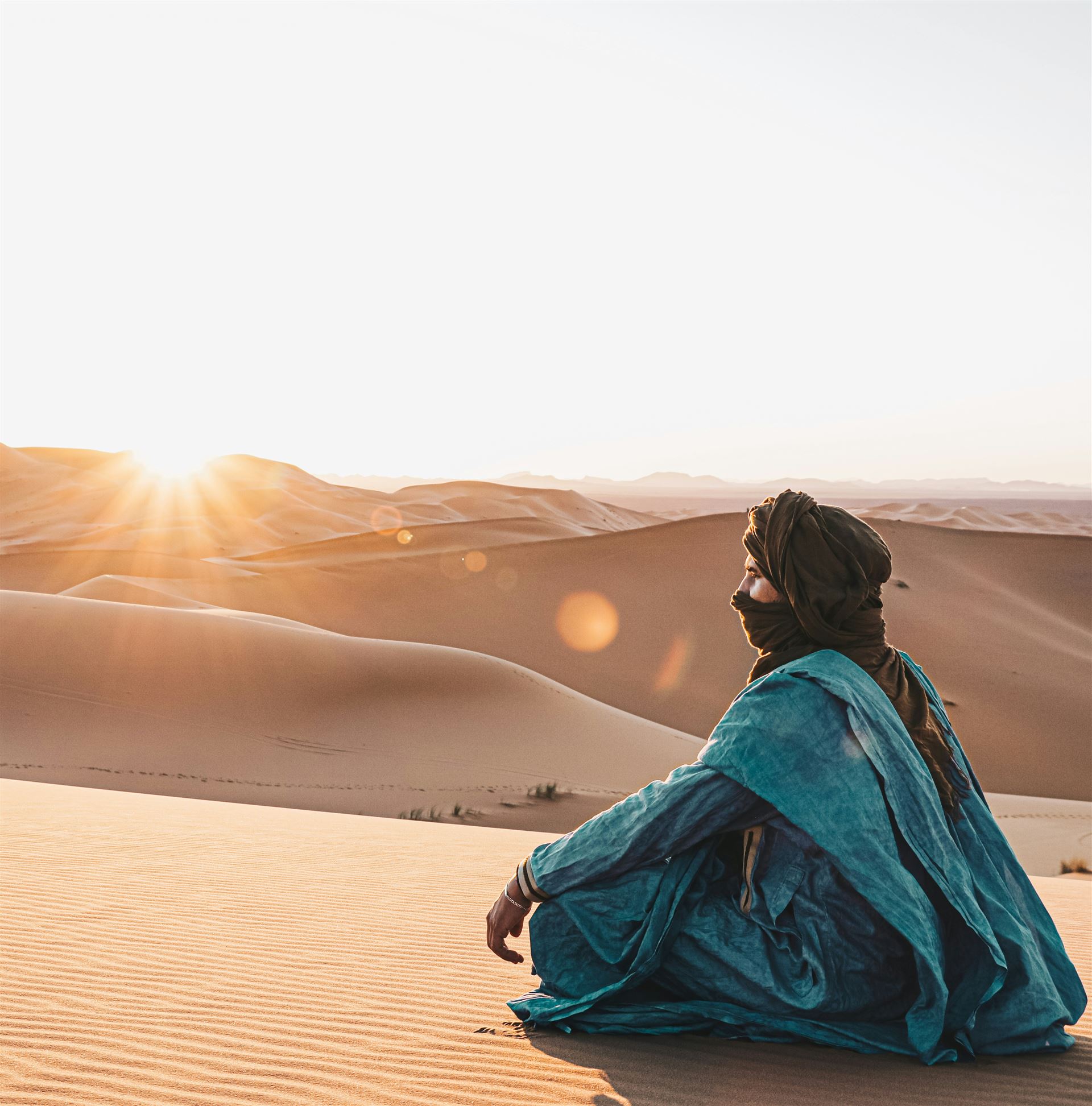
- A scarf / shemagh / keffiyeh: Invaluable in the desert — worn as a neck scarf, sun protection, sand shield during wind, or even as a head covering on camel. You can buy a beautiful one at any souk for €5–10.
- Swimwear: Some riads and desert camps have pools. Marrakech riads almost always do.
Sun Protection — Non-Negotiable
- High-factor sunscreen (SPF 50+): The Moroccan sun is intense even in autumn and spring. Apply to all exposed skin throughout the day. Sunscreen is available in Morocco but often expensive — bring your own.
- Sunglasses with UV protection: The reflected light from white sand and pale limestone is particularly intense.
- A wide-brimmed sun hat or baseball cap: Essential protection for the camel trek and dune walking.
- Lip balm with SPF: Desert air is dry and wind can chap lips quickly.
Essential Gear
- Small daypack or backpack: For carrying water, sunscreen, camera, and a layer during the camel trek and dune walks.
- Reusable water bottle (1 liter minimum): Stay hydrated in the desert. The camp provides water, but having your own bottle on the camel is important. Aim for 2–3 liters per day.
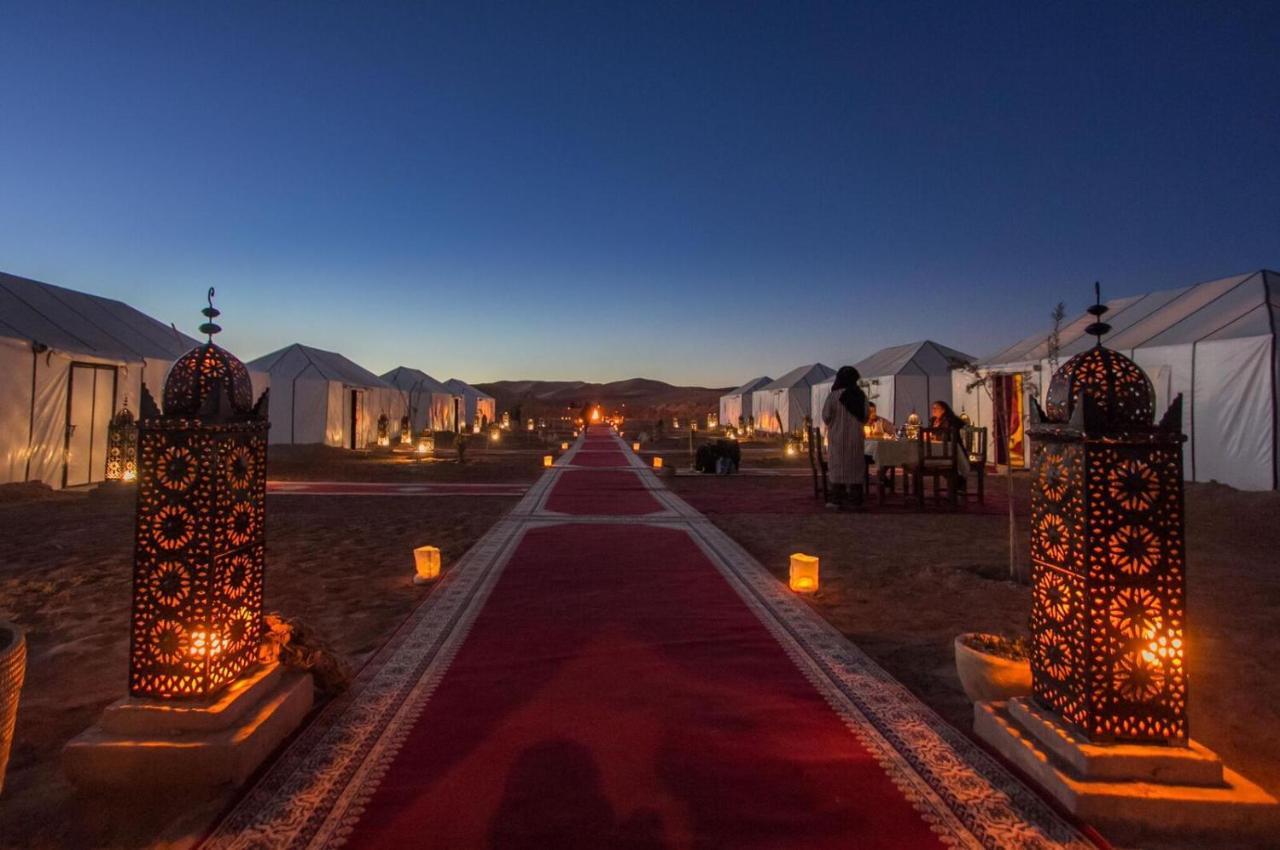
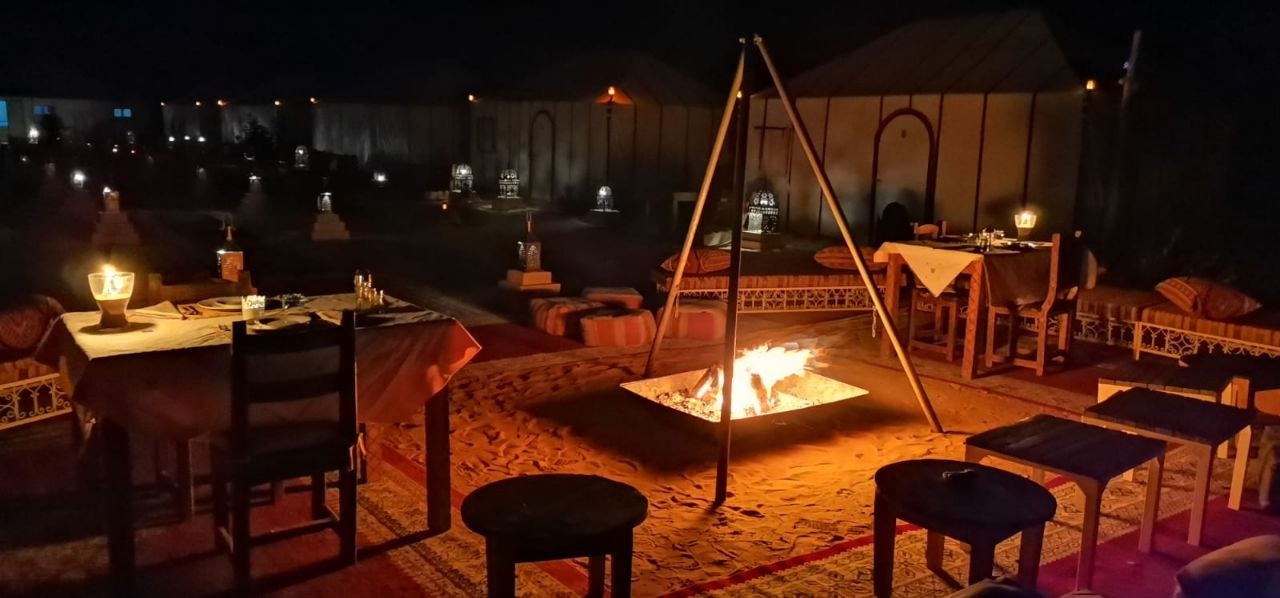
- Headlamp or small torch: Desert camps are not brightly lit, and the walk to the camp toilets at night is much easier with a headlamp.
- Small resealable bags: Sand gets into everything. Keep phone, passport, and electronics in resealable bags during the camel trek and dune walks.
- Earplugs: Desert camps can be noisy if other camp groups have late-running music. Also useful in Marrakech where the medina is lively at all hours.
- Hand sanitizer and tissues: Toilet facilities at desert camps are clean but basic.
- Travel insurance documents and emergency contacts: Printed, not just digital. Phone batteries die.
Camera & Photography Gear
- Camera + extra batteries: Cold desert nights drain batteries much faster than normal. Bring at least one fully charged spare. Keep batteries close to your body in cold weather.
- Extra memory cards: You will take far more photos than you expect.
- Lens cloths or blower: Fine sand is abrasive. Clean your lens regularly, especially during and after wind. Keep the camera in a bag when not in use.
- Small tripod or GorillaPod: For Milky Way and star trail photography at night. The desert is one of the world's finest stargazing environments — a tripod is worth its weight.
- Portable phone charger (power bank): Desert camps may have limited electricity. A 10,000 mAh power bank will keep your phone charged for 2–3 days.
Medications & Health
- Your regular prescription medications: Bring enough for the full trip plus a buffer. Specific medications may not be available in Morocco.
- Antihistamine tablets: Useful for unexpected allergies, dust reactions, or insect bites.
- Ibuprofen or paracetamol: Available in Morocco but bring your own for convenience.
- Oral rehydration sachets: If you experience stomach upset (common in the first day or two due to a change in water and food), oral rehydration sachets will help you recover faster.
- Immodium or anti-diarrheal tablets: Stomach upsets from spice adjustments are the most common traveler complaint in Morocco. Better to have it and not need it.
- Insect repellent: Mosquitoes are present near water sources (river oases, riads with pools) but rarely in open desert. Useful for the cities.
What to Leave at Home
- Heavy luggage with wheels: Wheeled suitcases are difficult in medina alleyways (cobblestones) and are stored in the vehicle during the desert camp night. A soft-sided bag or backpack is much more practical.
- Revealing clothing: Shorts, sleeveless tops, and very short skirts attract attention and are considered disrespectful in traditional areas. Cover up in medinas and villages; it's fine to dress more casually at your riad or desert camp.
- Expensive jewelry: Leave valuable jewelry at home. Practical accessories only.
- Too many pairs of shoes: One comfortable walking shoe, one pair of sandals, and one pair of flip-flops for the camp is all you need.
One Pro Tip from Our Guides
Buy a Moroccan djellaba (robe) in the Fes or Marrakech souks for around €15–20. It is the perfect garment for the desert camp night — warm, loose, and authentically beautiful in photographs. Many travelers buy one in the souk and wear it the same evening at the camp. It also doubles as a spare warm layer for the camel trek back in the morning.
If you have any specific questions about what to pack for your tour — based on the season, the duration, and the specific itinerary — don't hesitate to ask our team via WhatsApp. We're happy to give personalized advice.